Running Pain Doesn’t Have to Be Your Normal — Let’s Change That
Running shouldn’t hurt — and you shouldn’t have to figure out why it does.
Stride Running PT brings in-home care built specifically for runners across the Denver area.

What to Expect

Evaluation
Your first visit happens in your home and gives you real answers. We assess strength, mobility, gait, movement patterns, and your training structure.
You’ll know what’s wrong, why it’s happening, and exactly how to move forward.

Personalized Running Plan
You receive a complete plan that combines running-specific physical therapy, targeted strength, gait updates, and safe training structure.
Everything is tailored to your goals, your pace, and your timeline.

Ongoing Support and Progressions
Regular sessions spaced intentionally for real improvement, with consistent guidance between visits so you always know what to do next.
Trusted & Rated 5 Stars by Denver Runners:
Even If You Failed Other Treatments…We Can Help!
Running Injuries Need Running-Specific Solutions. Here’s the Difference:
We watch you run, build your training plan, and teach you the exercises runners truly need.
Care designed specifically for runners
✔ Stride Running PT
— Traditional PT Clinics
In-home convenience (no commuting, no crowded clinics)
✔ Stride Running PT
— Traditional PT Clinics
Gait and form analysis integrated into your plan
✔ Stride Running PT
— Traditional PT Clinics
Training guidance that keeps you running safely
✔ Stride Running PT
— Traditional PT Clinics
Unlimited support and adjustments between visits
✔ Stride Running PT
— Traditional PT Clinics
A guarantee your care continues until your goal is met
✔ Stride Running PT
— Traditional PT Clinics
The finish line program
Most clinics stop when your visits run out.
We work with you until you reach your goal.
As long as you attend at least one session per month:
• Care continues based on your progress
• No surprise discharges
• No preset timelines
If you reach your goal early:
• A portion of the program cost is refunded.

If it affects your ability to run, we can assess it and build a plan for it.
What We Help Runners Recover From
Common Back + Hip Injuries
Hamstring tendinopathy — deep ache or pulling at the upper hamstring, especially when accelerating or climbing hills
Glute medius tendinopathy / hip bursitis — pain on the outer hip that worsens with side-lying, stairs, or long runs
Hip flexor strain — tightness or pinching in the front of the hip, aggravated by speed work or uphill running
Femoroacetabular impingement (FAI) — pinching or stiffness deep in the hip joint, limiting stride extension
Low back and SI joint pain — stiffness or sharp discomfort around the lower spine or pelvis, often linked to weakness or imbalance

Common Knee Injuries
Patellofemoral pain syndrome (runner’s knee) — pain around or behind the kneecap, worse on hills or stairs
Quadriceps tendinopathy — aching or tenderness just above the kneecap, aggravated by downhill running
IT band syndrome — sharp outer-knee pain during or after runs, caused by friction along the iliotibial band
Hamstring tendinopathy (distal) — pain at the back of the knee that flares with speed or long strides

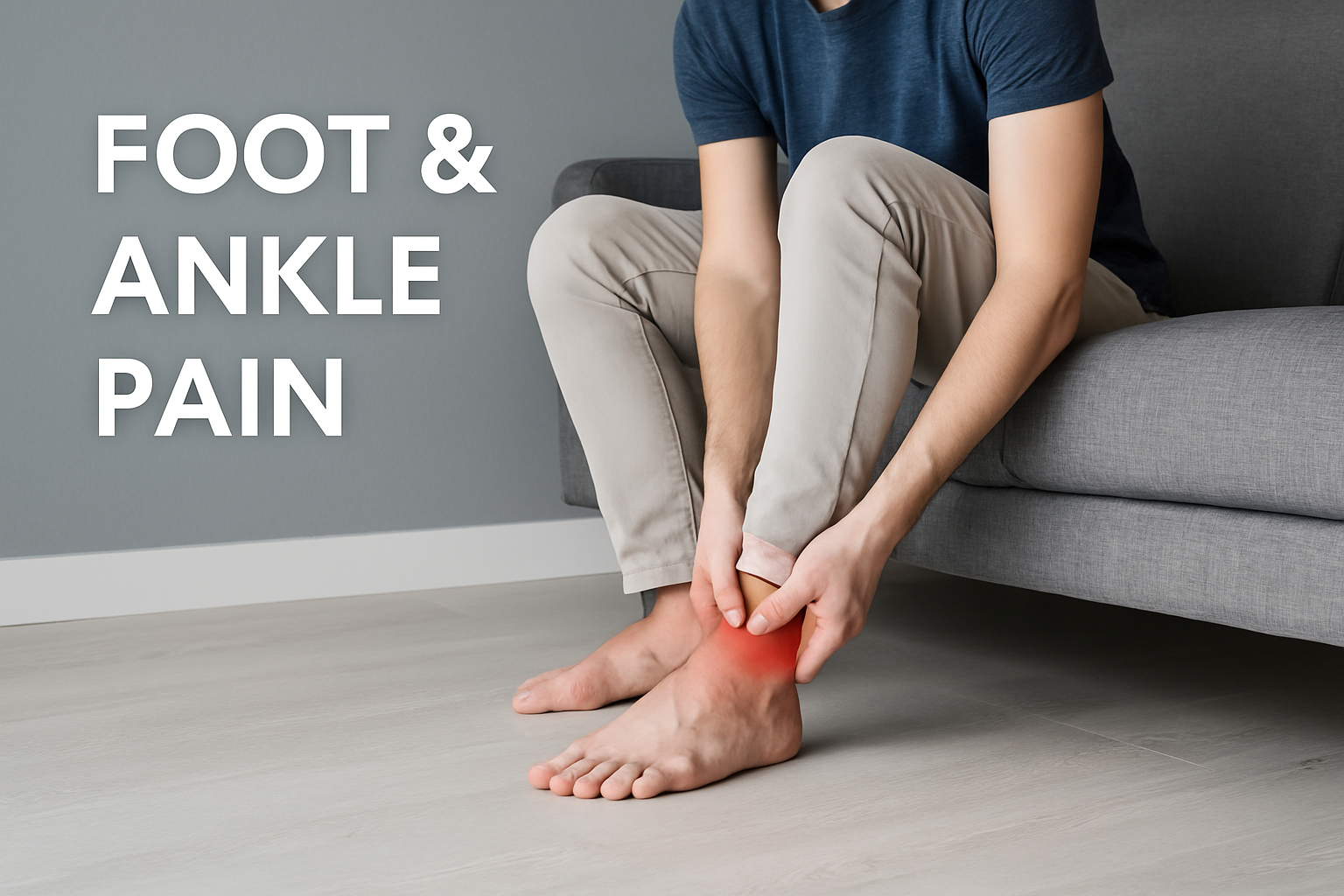
Common Foot + Ankle Injuries
Achilles tendinopathy — pain or stiffness in the back of the heel or lower calf, worse in the morning or after speed work
Calf strain — sudden pulling or tightness in the calf, limiting push-off during running
Plantar fasciitis — sharp heel or arch pain, especially with first steps in the morning
Morton’s neuroma — tingling or burning between the toes, often worse in tight shoes
Ankle sprains — lingering weakness or swelling after rolling the ankle
About Dr. Travis Downen PT, DPT

I’m a Doctor of Physical Therapy and former Division 1 runner who helps runners get back to running— safer, stronger and without setbacks.
I didn’t start as a natural. I began running as a beginner in high school and worked my way to a D1 scholarship, restarting from scratch multiple times along the way. I’ve personally dealt with bone, joint, and tendon injuries, so I understand both the frustration of being sidelined and what it actually takes to come back.
I’ve coached high school athletes and adult runners, including Boston Marathon qualifiers, and have completed advanced post-doctorate training in running-specific rehab and performance.
This isn’t generic physical therapy. You’ll get a plan built specifically for runners—designed to get you back to your goal.
Free Consultation Call
Not sure how to move forward with your running? Let’s figure it out.
In this free call, we’ll talk through your goals, training, and what’s holding you back—and map out a clear next step.
Book your free call and get a plan that actually makes sense.