

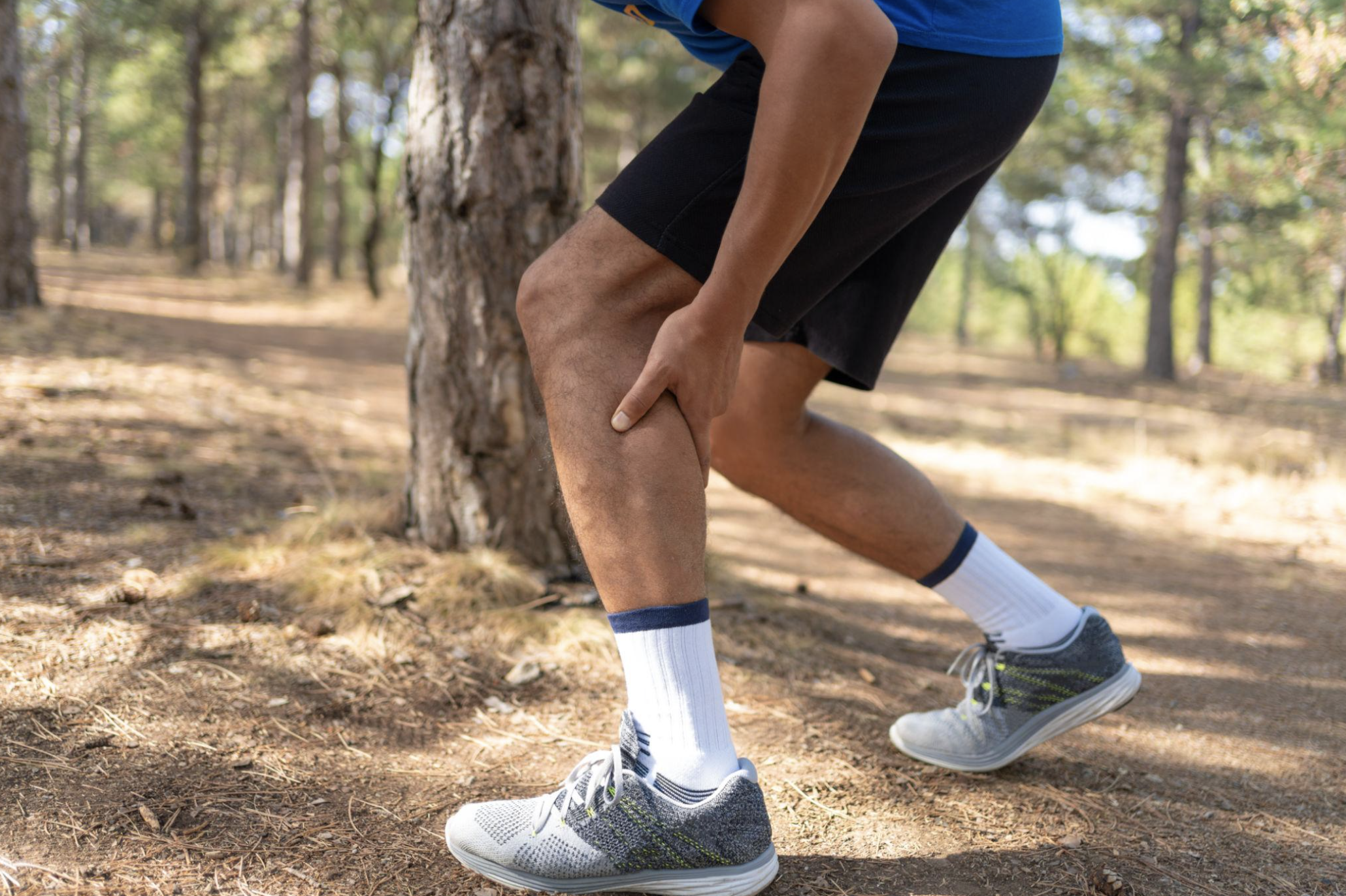
Calf pain is a common complaint among runners, but not every painful calf is dealing with the same problem.
Some runners feel a sudden sharp pain during a workout. Others develop a gradual ache or tightness that gets worse as they run. And some experience calf discomfort that seems to disappear after warming up, only to return later.
It's tempting to assume your calf is simply tight and needs stretching.
But calf pain can come from several different structures, and understanding what's causing it matters more than immediately trying to stretch it out.
What Do Your Calf Muscles Actually Do When You Run?
Your calf is one of the hardest-working muscle groups during running.
The two primary calf muscles are the gastrocnemius and soleus.
The gastrocnemius is the larger, more visible muscle that crosses both the knee and ankle. The soleus sits underneath it and crosses only the ankle.
Both contribute to the Achilles tendon, which attaches to your heel.
While many people think the calves are primarily responsible for pushing you forward, their role is much more extensive.
As your foot contacts the ground, the calf muscles help control the movement of your ankle and support your body as it travels over your foot.
They generate substantial force throughout stance and contribute to the storage and return of elastic energy through the Achilles tendon.
This means your calves are working hard with every step, even during relatively easy running.
When the demands of running exceed what your calf muscles can tolerate, pain can develop.
Where Is Your Calf Pain Located?
The location and behavior of your symptoms can provide useful clues about what may be involved.
Pain in the Upper Calf
Pain higher in the calf, particularly toward the inside of the leg, may involve the gastrocnemius.
Gastrocnemius injuries can occur during activities requiring rapid force production, such as sprinting, accelerating, or running uphill.
Some runners describe a sudden pulling sensation or sharp pain.
Others develop symptoms more gradually with increasing training demands.
Pain in the Lower or Deeper Calf
The soleus is located underneath the gastrocnemius and contributes significantly to force production during running.
Soleus-related pain may feel deeper or lower in the calf.
Because the soleus works with the knee both bent and straight, its demands can differ from those of the gastrocnemius.
However, pain location alone isn't enough to determine which muscle is involved.
Pain Near the Achilles Tendon
If your symptoms are concentrated along the tendon at the back of the ankle rather than within the calf muscle, the Achilles may be involved.
Achilles tendinopathy often behaves differently from an acute calf muscle strain.
For example, some runners notice stiffness with their first steps in the morning or pain that temporarily improves as they warm up.
Why Does Calf Pain Develop?
There isn't one universal cause.
But there are several factors I commonly consider when evaluating runners with calf pain.
Changes in Running Intensity
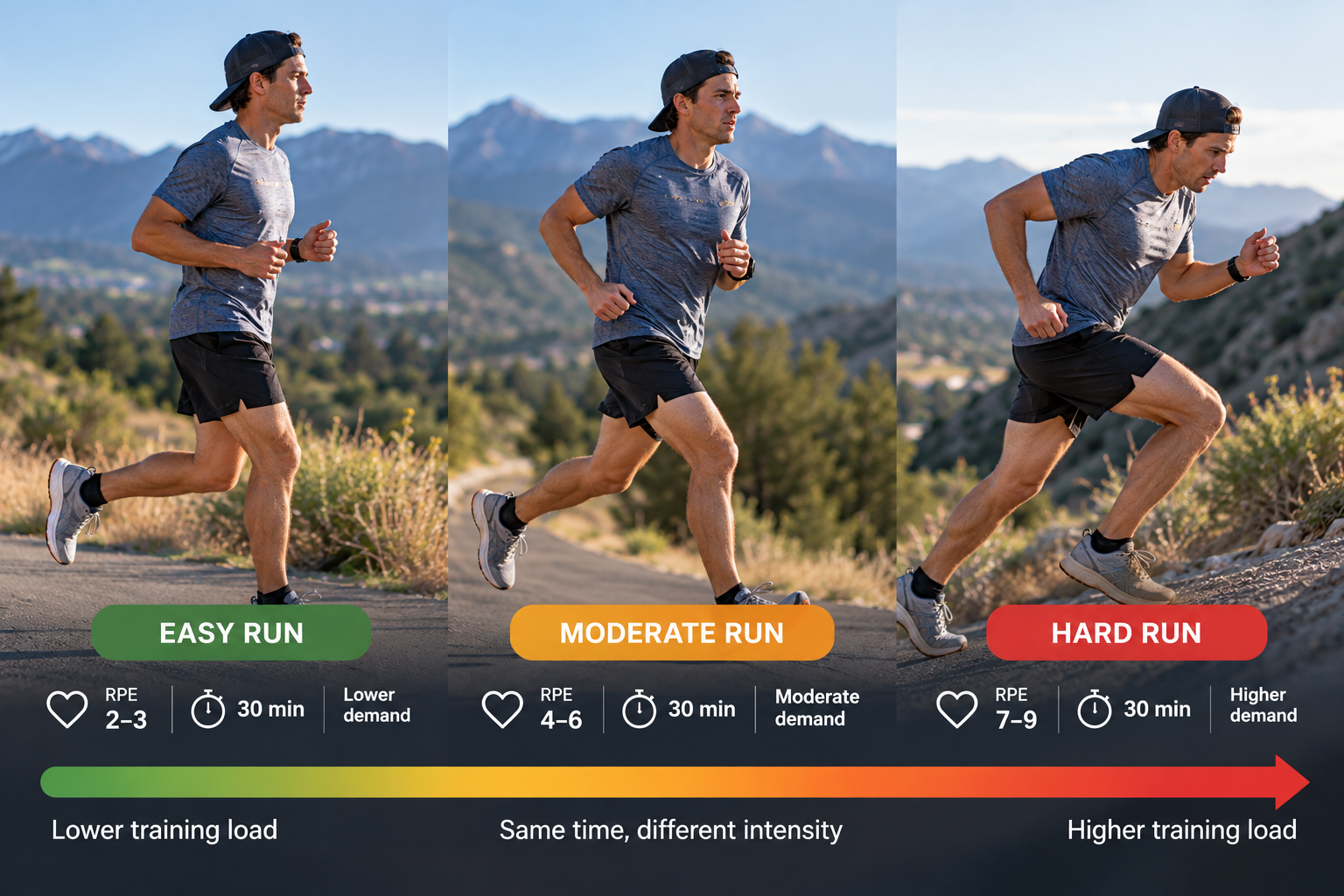
One of the most overlooked contributors is a change in training intensity.
Runners often focus on their weekly mileage when evaluating training load.
But running faster changes the demands placed on the calf muscles.
Sprinting, intervals, hill workouts, and faster-paced running can require greater force production than easy running.
A runner may maintain the same weekly mileage while significantly increasing the demands on their calves.
Running load isn't just how far you run. How intense you run matters, too.
This is why I always want to know what changed in someone's training before their symptoms started.
Hills Can Increase Calf Demands
Uphill running changes the mechanics and muscular demands of running.
The calf muscles contribute substantially to propelling the body uphill.
If you've recently added hill repeats or started running a hillier route, your calves may be experiencing demands they haven't adapted to yet.
That doesn't mean hills are bad.
It means they represent a training stimulus that needs to be considered alongside your other running.
Are Your Calves Too Weak?
Sometimes reduced calf strength or endurance is relevant to calf pain.
But that doesn't mean every runner with calf pain has weak calves.
A runner may demonstrate good strength during a few repetitions of a calf raise yet struggle to tolerate the repeated loading required during a long run.
Another runner may have sufficient endurance for easy running but lack the capacity for faster workouts.
This is why I look beyond whether someone can simply perform a calf raise.
Depending on the runner, it may be useful to evaluate strength, endurance, single-leg control, and tolerance to progressively demanding activities.
The goal isn't just to have strong calves. It's to have calves that can tolerate the specific demands of your running.
Should You Stretch a Painful Calf?
Stretching is one of the first things runners try when their calves hurt.
But I generally don't recommend automatically stretching an irritated calf without understanding the cause.
If someone has an acute muscle strain, aggressive stretching may place additional stress on injured tissue.
If the symptoms are coming from the Achilles tendon, stretching may not address the problem and can aggravate certain presentations, particularly insertional Achilles pain.
That's not to say stretching is never appropriate.
Mobility limitations may be relevant for some runners.
But feeling tight doesn't automatically mean you need to stretch.
What About Foam Rolling or Massage?
Foam rolling and massage may temporarily reduce discomfort or the sensation of tightness.
Some runners find these techniques helpful.
However, temporary symptom relief doesn't necessarily mean the underlying problem has been addressed.
If your calf pain is related to an inability to tolerate your current training demands, foam rolling alone isn't likely to build the strength or capacity you need.
These techniques may be useful as part of a broader approach, but I wouldn't rely on them as the primary solution.
Can You Keep Running With Calf Pain?
That depends on the likely cause and severity of your symptoms.
A mild, load-related muscular problem may sometimes allow modified activity.
An acute calf strain, particularly one involving sudden pain, loss of strength, or difficulty walking, may require a period away from running.
And not all calf pain is a running injury.
New, unexplained calf swelling, warmth, redness, or tenderness—especially in one leg—requires prompt medical evaluation because a blood clot is one possible cause. Sudden shortness of breath, chest pain, or fainting requires emergency care.
For less concerning muscular presentations, I generally consider whether symptoms:
Increase as the run continues
Cause changes in running mechanics
Persist or worsen after running
Become more noticeable during normal walking
Return earlier during subsequent runs
Progressively worsening symptoms may indicate that the current training demands need to change.
Why Rest Alone May Not Solve Calf Pain
Rest can be useful, particularly after an acute muscle injury.
But depending on the condition, feeling better after time away from running doesn't necessarily mean the calf is ready for your previous training.
For example, a runner may take several weeks off, feel completely pain-free, and then immediately return to speed workouts.
If the calf hasn't regained the capacity to tolerate those demands, symptoms may return.
A complete rehabilitation process may involve progressively rebuilding strength, endurance, and eventually the ability to handle faster and more explosive movements.
The goal isn't simply to make the calf stop hurting.
It's to restore its ability to handle the demands of running.
What Does Physical Therapy for Calf Pain Look Like?
A running-focused physical therapy assessment should involve more than identifying where the calf hurts.
Depending on the presentation, I may evaluate:
The location and behavior of symptoms
Whether pain started suddenly or gradually
Recent changes in training volume and intensity
Calf strength and endurance
Ankle mobility
Single-leg control
Running mechanics
Previous injuries and running goals
These findings help determine whether the symptoms are consistent with a muscle or tendon injury or whether additional medical evaluation is necessary.
Treatment may involve progressive strengthening, activity modifications, and a gradual return to the demands of running.
There isn't one universal stretch or exercise that fixes every type of calf pain.
Calf Pain Keeping You From Running?
If calf pain is interfering with your training, understanding what's causing it is the first step toward getting back to running.
At Stride Running PT, I provide running-focused physical therapy that looks beyond the painful area.
I evaluate strength, mobility, running mechanics, training demands, and your individual goals to help develop a plan for returning to running.
And because Stride Running PT is mobile, I come to you, serving runners throughout Littleton, Denver, and surrounding communities.
Whether you're trying to return to your normal mileage or preparing for an upcoming race, the goal is to help you get back to consistent running.
Book a Call to learn more about running-focused physical therapy.
Disclaimer: This article is for educational purposes only and is not intended to provide medical advice, diagnosis, treatment, or individualized recommendations. Calf pain can have multiple causes, including medical conditions requiring prompt evaluation. Sudden or unexplained swelling, redness, warmth, significant weakness, or worsening symptoms should be assessed by a qualified healthcare professional.